Choosing the right orthodontist in Boerne for braces or clear aligners can feel overwhelming. The person you pick shapes your results, your comfort, and your total treatment time, so a little upfront research pays off for years. At Complete Dental Studio, we want you to feel informed before you commit to any treatment plan, whether that treatment is with us or another office in your area.
Here’s what you need to know.
What Is an Orthodontist and How Do They Differ From a Dentist?
An orthodontist is a dental specialist who completes 2 to 3 additional years of residency after dental school, focused entirely on tooth alignment, jaw growth, and bite correction. A general dentist handles overall oral health, including cleanings, fillings, and crowns. Some dentists offer braces or aligners, but they don’t have the same specialty training.
That extra residency makes a real difference. Orthodontists study the biomechanics of tooth movement full-time for years before treating patients independently. At Complete Dental Studio, Dr. Katie Vo leads our orthodontic care with specialty-level training.
A few credentials to look for:
- Board certification by the American Board of Orthodontics signals voluntary, rigorous testing beyond residency.
- AAO membership (American Association of Orthodontists) shows ongoing specialty education.
- Specialty residency completion confirms the provider trained specifically in orthodontics.
General dentists can legally offer orthodontic treatment, but their scope is usually limited to mild alignment cases. For complex bites, growing children, or jaw concerns, a specialist is the stronger choice.
How to Evaluate and Choose the Right Orthodontist
Finding the right fit takes a little homework. The good news? Most of it can be done from your couch before you ever step into an office.
Follow these steps:
- Research credentials first. Check for board certification, residency training, and years of experience. A quick look at the provider’s bio page tells you a lot.
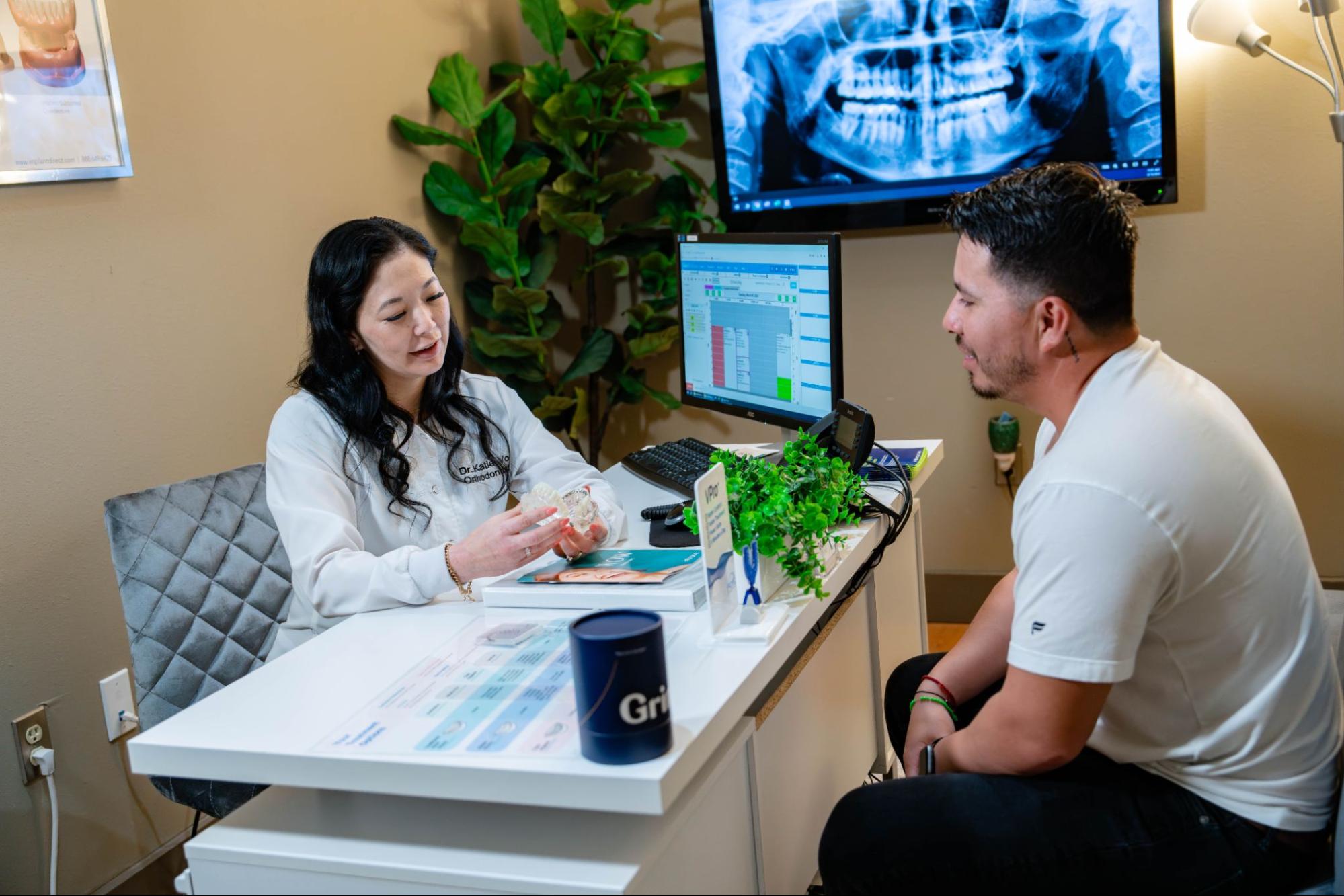
- Book a free consult. Most orthodontists offer complimentary first visits. Use that time to meet the doctor, tour the office, and ask questions.
- Ask about technology. Modern practices use 3D scans and digital impressions instead of goopy molds. Updated technology makes treatment faster and more comfortable.
- Discuss treatment options. A good orthodontist presents multiple options (braces, clear aligners, and lingual braces) and explains the pros and cons of each.
- Get the timeline and payment options upfront. You should leave the consult knowing the estimated length of treatment and the payment options available to you.
- Read local reviews. Google reviews from real patients give you honest insight into the office experience, staff, and results.
- Trust your gut. If the office feels rushed, pushy, or cold, keep looking. You’ll be visiting every 4 to 8 weeks for a year or more.
Questions worth asking during your free ortho consult:
- Are you board-certified?
- How many cases like mine have you treated?
- What’s included in my treatment (retainers, emergency visits, and follow-ups)?
- What happens if my treatment takes longer than planned?
- Who handles emergencies after hours?
Complete Dental Studio makes regular check-ins simple for busy families, with convenient scheduling and a team that treats you like a neighbor.
Benefits of Choosing a Specialist Orthodontist Over a General Dentist
Specialists bring depth that general training can’t match. When you choose an orthodontist, you’re choosing someone whose entire career centers on moving teeth and aligning jaws and nothing else.
Why does specialist training matter for your results?
Here’s what that specialty focus gets you:
- Advanced training in tooth movement. Orthodontists understand how roots, bone, and gum tissue respond to pressure over months of treatment. That knowledge helps avoid damage and shortens treatment time in many cases.
- The full range of appliances. Specialists work with palatal expanders, lingual braces, self-ligating brackets, and advanced aligner systems. General dentists typically offer only one or two options.
- Better handling of complex cases. Crossbites, deep overbites, severe crowding, and open bites need specialist-level planning. Dr. Katie Vo and our team have the training to tackle cases that general dentists often refer out.
- Specialized diagnostic skills. Orthodontists are trained to read cephalometric X-rays and 3D scans that map jaw structure, airway, and growth patterns. This diagnostic depth leads to more accurate treatment plans.
- More predictable outcomes. When the person planning your treatment has studied it full-time for years, you tend to see steadier progress and fewer surprises.
How does a multi-specialty office help your treatment?
- Lower risk from DIY alternatives. Mail-order aligner companies skip the in-person exam entirely. According to the American Association of Orthodontists, in-person supervision by a specialist reduces the risk of permanent damage from improperly guided tooth movement.
- Coordinated care under one roof. At Complete Dental Studio, you get one-stop smile care with Dr. Vo, Dr. Alghadban, and Dr. Burceag working together. Orthodontics, periodontics, and general dentistry live in a single office.
- Fewer appointments across town. For families, that coordination means a treatment team that already knows your mouth, your history, and your preferences.
Orthodontist vs. Dentist: Side-by-Side Comparison
Here’s a quick way to see the differences. In short: dentists are generalists trained in overall oral health, while orthodontists are specialists trained only in alignment and bite correction. Both have a place, but your case complexity decides which is right for you.
| Factor | General Dentist | Orthodontist |
|---|---|---|
| Training | 4 years of dental school | Dental school plus a 2 to 3 year specialty residency |
| Scope | General oral health, fillings, crowns, cleanings | Tooth alignment, bite correction, jaw growth |
| Case complexity | Mild cosmetic alignment | Mild to severe, including complex bites |
| Appliances offered | Usually clear aligners only | Braces, aligners, expanders, lingual braces, retainers |
| Diagnostic tools | Standard X-rays | Cephalometric X-rays, 3D scans, growth analysis |
| Board certification | General dentistry boards | American Board of Orthodontics |
| Best for | Minor front-tooth touch-ups | Any orthodontic case, especially complex ones |
When a dentist may be enough: You have minor crowding or spacing on front teeth only, no bite issues, and want a quick cosmetic adjustment.
When you need an orthodontist: You have a crossbite, overbite, underbite, severe crowding, jaw pain, a growing child, or you want the broadest range of treatment options.
Dr. Alghadban, our periodontist, often collaborates with Dr. Vo on cases involving gum health and tooth movement. This is another advantage of choosing a multi-specialty office.
Paying for Orthodontic Treatment: Insurance and Financing
Your treatment plan depends on case complexity, appliance type, and treatment length. Once you know the plan, insurance and financing options can make treatment easier to manage:
- Many dental insurance plans cover a portion of orthodontic treatment, often with a lifetime maximum that varies by plan.
- HSA and FSA dollars can be used for orthodontic care.
- CareCredit and Sunbit financing, both accepted at Complete Dental Studio, spread payments across your treatment timeline.
- Complete Dental Studio also offers our Dental Discount Plan for patients without insurance.
Ask your orthodontist to walk you through the full treatment plan and payment options at your consult so there are no surprises later.
When to See an Orthodontist: Signs and Age Guidelines
The American Association of Orthodontists recommends every child have a first orthodontic evaluation by age 7. That doesn’t mean treatment starts at 7. It just means a specialist can catch growth and bite issues early, while the jaw is still developing.
Signs it’s time to schedule a consult:
- Crowding or crooked teeth that make brushing and flossing harder
- Visible gaps between teeth
- Overbite or underbite where upper and lower teeth don’t meet properly
- Crossbite causing uneven wear
- Jaw pain, clicking, or popping when chewing or opening wide
- Mouth breathing or snoring, which can signal airway concerns
- Speech issues linked to tooth position
- Thumb-sucking past age 5 to 6
- Difficulty chewing or biting food
Adults are candidates too. Teeth can be moved at nearly any age, as long as the gums and bone are healthy. Many patients start treatment in their 30s, 40s, and beyond, often because they finally have the time and resources to focus on their own smile.
A free ortho consult at Complete Dental Studio can help you find out whether treatment is needed now, later, or at all.
Frequently Asked Questions About Choosing an Orthodontist
Should I choose a dentist or an orthodontist for braces or Invisalign?
A general dentist can handle mild cosmetic alignment, but their scope is usually limited to minor front-tooth issues, with fewer appliance options and less specialized planning. For anything beyond that, an orthodontist is the stronger choice because the treatment is more predictable and complete.
Does it matter which provider you choose for Invisalign treatment?
Yes, it matters a lot. Invisalign is a tool, and results depend heavily on the provider’s training and experience. An orthodontist plans every tooth movement, monitors progress, and adjusts the plan when teeth don’t track as expected. A less-experienced provider may miss issues that lead to longer treatment or incomplete results.
At what age should my child first see an orthodontist?
The American Association of Orthodontists recommends a first evaluation by age 7. Most kids won’t need braces that young, but early visits let a specialist spot issues with jaw growth, bite development, or crowding while there’s still time to guide things gently. Early evaluation is free at Complete Dental Studio.
How do I verify if an orthodontist is board-certified?
Visit the American Board of Orthodontics website (americanboardortho.com) and search by name. Board certification is voluntary and signals the provider passed rigorous written and clinical exams beyond residency. You can also ask the office directly during your free consult.
How long does orthodontic treatment typically take?
Most cases take 12 to 24 months, though some mild cases finish in 6 to 9 months and complex cases can run 24 to 30 months. Your treatment length depends on case complexity, appliance type, and how closely you follow your orthodontist’s instructions, especially with aligners and elastics.
Does dental insurance cover orthodontic treatment in Texas?
Many Texas dental plans include orthodontic coverage, typically with a lifetime maximum benefit. Coverage varies widely, so call your insurance company before starting treatment. HSA and FSA accounts can also be used for orthodontic care. Our team is happy to help you check your benefits before your free ortho consult.
Choosing between a dentist and an orthodontist comes down to case complexity, training, and the range of options you want on the table. For minor cosmetic touch-ups, a trusted general dentist may fit the bill. For bite correction, growing children, or complex alignment, a specialist’s deeper training generally leads to steadier results. Whatever path you choose, make sure you understand the credentials, the technology, and the payment options before you begin. When you’re ready to take the next step, schedule your free ortho consult with Complete Dental Studio and let us help you complete your smile with the right plan, right team, and right technology, all under one roof.
